
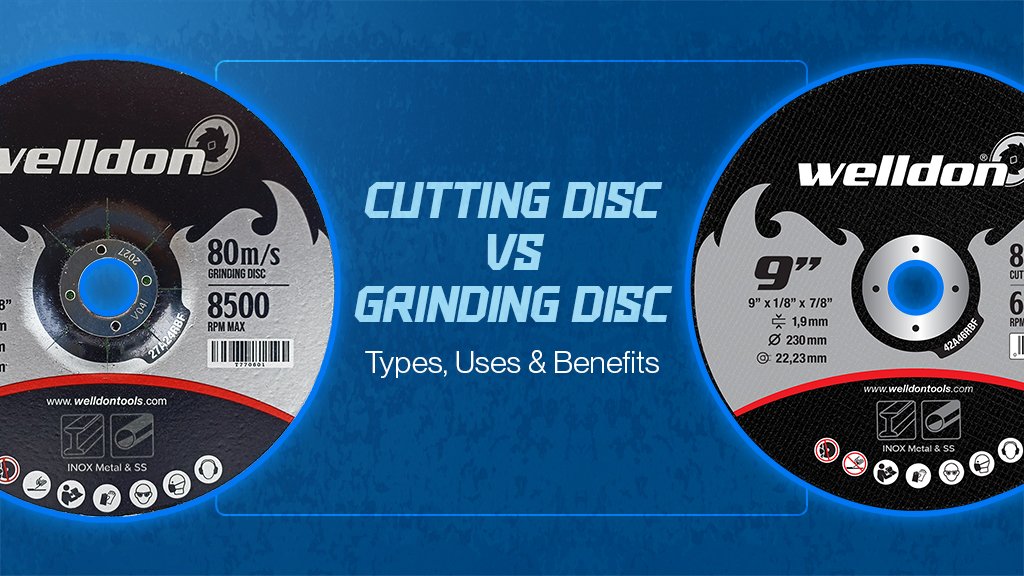
If you’ve ever stood in front of a tool shelf—or scrolled through an abrasives catalog—you’ve probably wondered: What’s the real difference between a cutting disc and a grinding disc? At first glance, they look similar. Both are round, both are mounted on angle grinders, and both are used on metal. But in reality, they serve very different purposes.
This confusion is common among beginners, DIY users, and even some workshop operators. Using the wrong disc not only affects performance but can also lead to poor results, damaged materials, and serious safety risks.
In this guide, we’ll clearly explain:
- What cutting discs are
- What grinding discs are
- The key differences between them
- When and where to use each one
By the end, you’ll know exactly which disc to choose for your job—and why it matters.
What Is a Cutting Disc?
A cutting disc is specifically designed to cut through materials, not grind or shape them. It works by slicing through the material with a thin, fast-moving abrasive edge.
Basic Definition of a Cutting Disc
Cutting discs are:
- Thin in structure
- Designed for straight cuts
- Used with angle grinders or cut-off machines
They are commonly made using abrasive grains bonded together with resin, which is why they’re often called resin cutting discs.
How Cutting Discs Work
Cutting discs remove material by:
- Applying high-speed rotation
- Creating a narrow cutting line
- Minimizing contact with the surface
Because of their thin design, cutting discs:
- Cut faster
- Produce less friction
- Generate less heat
This makes them ideal for jobs that require speed and precision.
Common Materials Cutting Discs Are Used On
Cutting discs are widely used for cutting:
- Mild steel
- Stainless steel
- Iron rods and pipes
- Metal sheets and profiles
Thin cutting discs are especially popular for stainless steel, where clean cuts and low heat are essential.
What Is a Grinding Disc?
A grinding disc is designed for material removal, surface leveling, and finishing—not cutting.
Basic Definition of a Grinding Disc
Grinding discs are:
- Thicker than cutting discs
- Built to handle high pressure
- Used for grinding, smoothing, and shaping
They are often referred to as grinding wheels or grinding discs.
How Grinding Discs Work
Instead of slicing through material, grinding discs:
- Abrade the surface gradually
- Remove excess metal
- Smooth rough edges or weld joints
They operate with:
- Higher contact area
- More pressure
- Slower material removal compared to cutting discs
Common Materials Grinding Discs Are Used On
Grinding discs are commonly used on:
- Weld joints
- Metal surfaces
- Cast iron
- Steel structures
They are essential in fabrication and finishing work, especially after cutting or welding.
Key Differences Between Cutting Discs and Grinding Discs
Although they may look similar, cutting discs and grinding discs are engineered differently. Understanding these differences helps ensure better results and safer operation.
Difference in Thickness
One of the most noticeable differences is thickness.
- Cutting Discs: Very thin (usually 1.0–3.0mm)
- Grinding Discs: Much thicker (often 6mm or more)
Thin cutting discs allow faster cuts, while thick grinding discs can withstand heavy pressure.
Difference in Purpose
Their purpose is completely different:
- Cutting discs: Used only for cutting through materials
- Grinding discs: Used for grinding, smoothing, and shaping
Using a disc outside its intended purpose can damage the disc and pose safety risks.
Difference in Cutting Speed
- Cutting discs work faster because of minimal surface contact
- Grinding discs work slower but remove material more aggressively
Speed vs control is a key distinction here.
Difference in Pressure Handling
- Cutting discs are designed for low pressure
- Grinding discs can handle high pressure
Applying side pressure on a cutting disc can cause it to break, which is extremely dangerous.
Safety Differences Between Cutting Discs and Grinding Discs
Safety is one of the most critical reasons why cutting discs and grinding discs should never be used interchangeably.
Cutting Disc Safety Considerations
Cutting discs are designed for straight, forward cutting only. Because they are thin:
- They cannot handle side pressure
- They can crack or shatter if bent
- Improper use increases the risk of accidents
Using a cutting disc for grinding is one of the most common and dangerous mistakes in workshops.
Grinding Disc Safety Considerations
Grinding discs are thicker and stronger, which allows them to:
- Handle heavy pressure
- Maintain stability during surface grinding
- Be safely used at slight angles
However, grinding discs should not be forced to cut through materials, as this:
- Slows down work
- Causes excessive wear
- Reduces disc lifespan
Can You Use a Cutting Disc for Grinding (or Vice Versa)?
This question comes up often, especially among beginners.
Why Cutting Discs Should Never Be Used for Grinding
Using a cutting disc for grinding:
- Applies side pressure the disc is not designed for
- Increases the chance of disc breakage
- Puts the operator at serious risk
Cutting discs are engineered for straight-line cutting only.
What Happens If You Use a Grinding Disc for Cutting?
While grinding discs can technically cut through thin material, they:
- Cut much slower
- Produce rough edges
- Generate more heat
- Wear out quickly
For clean and efficient cuts, cutting discs are always the better option.
How to Choose the Right Disc for Your Job
Choosing the right disc isn’t complicated once you understand the application.
Choose Based on the Task
Ask yourself:
- Are you cutting through material? → Use a cutting disc
- Are you smoothing, leveling, or shaping? → Use a grinding disc
Each disc is purpose-built and performs best when used correctly.
Choose Based on Material Type
Different materials require different disc characteristics:
- Stainless Steel: Thin cutting discs or specialized grinding discs
- Mild Steel: Standard cutting and grinding discs
- Cast Iron: Heavy-duty grinding discs
Matching the disc to the material improves efficiency and safety.
Check Angle Grinder Compatibility
Before using any disc:
- Confirm the disc diameter matches your grinder
- Ensure the maximum RPM rating is equal to or higher than the grinder speed
Incorrect compatibility can lead to disc failure.
Cutting Disc vs Grinding Disc in Industrial Applications
In professional environments, both discs play essential roles.
Metal Fabrication Industry
- Cutting discs are used to cut raw metal sections
- Grinding discs are used to smooth edges and welds
Both are necessary for a complete fabrication process.
Construction Industry
- Cutting discs are used for cutting steel rods and frames
- Grinding discs prepare surfaces for welding and finishing
Durability and reliability are especially important in construction settings.
Automotive and Maintenance Workshops
- Cutting discs remove damaged parts
- Grinding discs refine surfaces and joints
Precision and control are key in these applications.
Why Disc Quality Matters More Than You Think
Low-quality discs may look similar to premium ones, but the difference shows during use.
Problems With Low-Quality Discs
- Faster wear
- Uneven cutting or grinding
- Increased vibration
- Higher safety risks
Benefits of High-Quality Discs
- Consistent performance
- Better control
- Longer lifespan
- Improved safety
Trusted manufacturers like Welldon focus on quality materials, strict testing, and consistent manufacturing standards.
Frequently Asked Questions (FAQ)
Which disc is safer for beginners?
Both are safe when used correctly, but cutting discs require more caution due to their thin structure.
Which disc lasts longer?
Grinding discs generally last longer because they are thicker, but lifespan depends on application and usage.
Can one disc replace the other?
No. Cutting and grinding discs are designed for different tasks and should not be used interchangeably.
Which disc should be used for stainless steel?
Thin cutting discs for cutting and specialized grinding discs for finishing stainless steel work best.
Conclusion: Choosing the Right Disc Makes All the Difference
Understanding the difference between cutting discs and grinding discs is essential for achieving better results, improving efficiency, and maintaining safety.
Cutting discs are designed for fast, clean cuts, while grinding discs are built for material removal and surface finishing. Each has its place, and using the right disc for the right job makes your work easier, safer, and more professional.
Whether you’re working in metal fabrication, construction, or maintenance, investing in high-quality cutting and grinding discs ensures consistent performance and reliable results. Manufacturers like Welldon provide solutions designed to meet real-world industrial demands.