
Diamond blades are essential tools in construction, stone processing, and renovation work. From cutting concrete and asphalt to shaping tiles and natural stone, the right diamond blade can significantly impact cutting speed, finish quality, safety, and overall project cost.
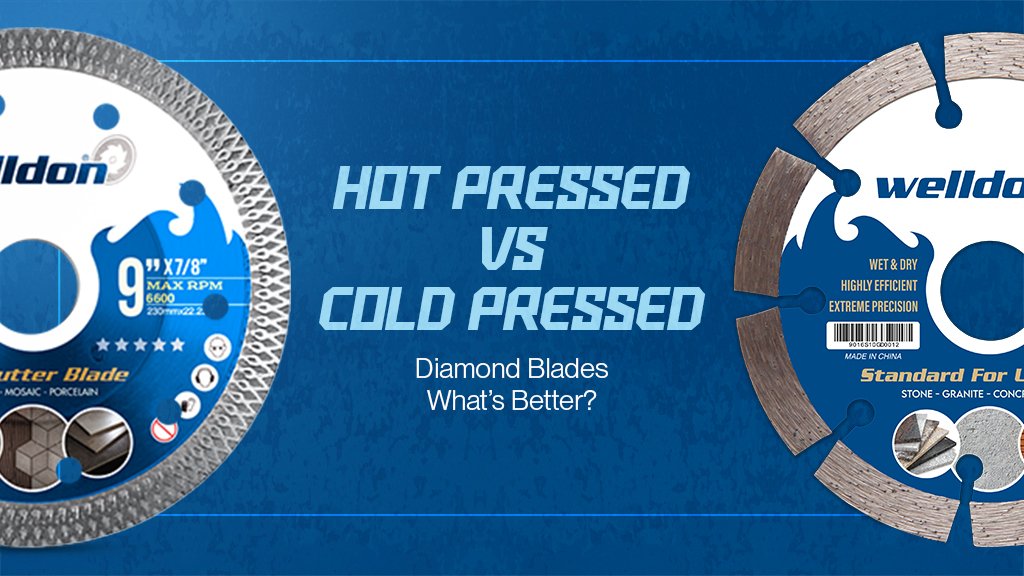
One of the most common questions professionals and buyers ask is: hot pressed vs cold pressed diamond blades – which is better? The answer depends on how these blades are made, how they perform under different conditions, and what type of work you are doing.
This guide explains both manufacturing methods in detail, compares performance and applications, and helps you decide which diamond blade offers better value for your specific needs.
What Are Diamond Blades?
Diamond blades are cutting tools designed with industrial-grade diamonds embedded in their cutting edge. These diamonds are not used to cut by sharpness; instead, they grind through hard materials using abrasion.
A standard diamond blade consists of:
- A steel core that provides stability and shape
- Diamond segments or a continuous rim that performs the cutting
- A bonding matrix that holds the diamonds in place
Diamond blades are widely used for cutting:
- Concrete and reinforced concrete
- Marble, granite, and natural stone
- Ceramic and porcelain tiles
- Masonry, bricks, and blocks
- Asphalt and construction materials
The manufacturing process directly affects blade strength, lifespan, and cutting behavior. This is where hot pressed and cold pressed blades differ.
What Is a Hot Pressed Diamond Blade?
Hot pressed diamond blades are manufactured using a single-step process where heat and pressure are applied simultaneously. During production, diamond particles and metal powder are pressed together under high temperature, forming a solid, dense segment that bonds directly to the steel core.
Because the diamonds and metal bond are formed together in one process, hot pressed blades typically have:
- A smooth and uniform cutting edge
- Strong diamond retention for precise cuts
- Consistent performance at lower cutting loads
Hot pressed blades are commonly produced as:
- Continuous rim blades
- Thin turbo blades
- Precision cutting blades
They are widely used where accuracy and clean finishes are more important than extreme durability.
What Is a Cold Pressed Diamond Blade?
Cold pressed diamond blades are manufactured in multiple steps. First, the diamond segments are formed under pressure without high heat. These segments are then attached to the steel core using laser welding, high-temperature brazing, or sintering.
This method allows for:
- Thicker and more aggressive segments
- Strong mechanical bonding between segment and core
- Higher resistance to heat and stress during cutting
Cold pressed blades are generally designed for heavy-duty and industrial use, especially in demanding cutting environments.
Key Differences Between Hot Pressed and Cold Pressed Diamond Blades
Manufacturing Method
Hot pressed blades are created in a single heat-and-pressure process, producing a dense and smooth cutting edge. Cold pressed blades involve separate segment creation and attachment, resulting in thicker and tougher cutting segments.
Bond Strength and Durability
Cold pressed blades usually have stronger segment attachment, making them more resistant to segment loss in high-load applications. Hot pressed blades offer reliable bonding but are better suited for lighter tasks.
Cutting Speed and Efficiency
Hot pressed blades provide smoother and more controlled cutting, especially on tiles and stone. Cold pressed blades are more aggressive and remove material faster in concrete and masonry.
Blade Lifespan
Cold pressed blades generally last longer in tough materials like reinforced concrete. Hot pressed blades have a shorter lifespan under heavy stress but perform very well in precision applications.
Heat Resistance
Cold pressed blades handle heat better during long cutting sessions. Hot pressed blades are more sensitive to overheating and usually perform best with controlled cutting or wet use.
Performance Comparison in Real Applications
Dry Cutting Performance
Cold pressed blades excel in dry cutting environments where heat buildup is high. Their strong segment bonding prevents premature wear. Hot pressed blades can be used dry but require careful handling to avoid overheating.
Wet Cutting Performance
Hot pressed blades perform exceptionally well in wet cutting, especially on tiles and stone, delivering clean edges. Cold pressed blades also benefit from wet cutting, particularly in concrete and asphalt.
Precision vs Heavy-Duty Cutting
For precision work like ceramic tiles or marble slabs, hot pressed blades provide better control and finish. For heavy-duty tasks like roadwork or structural concrete, cold pressed blades are the better choice.
Continuous Use
Cold pressed blades are designed for extended cutting sessions. Hot pressed blades are better for intermittent or controlled use.
Applications of Hot Pressed Diamond Blades
Hot pressed diamond blades are ideal for:
- Ceramic and porcelain tile cutting
- Marble and granite finishing
- Decorative stone work
- Light renovation and interior projects
- Jobs requiring smooth, chip-free edges
They are commonly used by tile installers, stone fabricators, and interior renovation professionals.
Applications of Cold Pressed Diamond Blades
Cold pressed diamond blades are best suited for:
- Concrete and reinforced concrete cutting
- Asphalt and roadwork
- Masonry blocks and bricks
- Industrial construction projects
- Heavy-duty demolition and renovation work
These blades are preferred by contractors, builders, and infrastructure professionals.
Cost vs Value: Which Offers Better ROI?
Hot pressed blades typically have a lower initial cost and are economical for light-duty or precision work. However, they may require more frequent replacement if used on hard or abrasive materials.
Cold pressed blades usually cost more upfront but offer longer lifespan and higher durability, making them more cost-effective for heavy-duty and professional use.
The better return on investment depends on how demanding the job is and how often the blade is used.
How to Choose the Right Diamond Blade for Your Project
To select the right blade, consider:
- The material hardness and composition
- Whether the cutting will be wet or dry
- The power and RPM rating of your machine
- The scale and duration of the project
- Required finish quality
Matching the blade type to the application ensures better performance and safer operation.
Common Mistakes When Selecting Diamond Blades
- Choosing a blade based only on price
- Using tile blades on concrete or reinforced materials
- Ignoring wet or dry cutting requirements
- Exceeding recommended machine RPM
- Overlooking safety standards and blade quality
Avoiding these mistakes can extend blade life and improve cutting efficiency.
Safety and Best Practices
- Always check blade compatibility with your machine
- Follow manufacturer RPM limits
- Use proper cooling for wet cutting
- Allow the blade to cut without excessive force
- Store blades in dry, flat conditions
Proper handling improves both safety and blade performance.
Hot Pressed vs Cold Pressed: Quick Decision Guide
Choose hot pressed diamond blades if:
- You need smooth, precise cuts
- You are working with tiles or stone
- Finish quality is a priority
Choose cold pressed diamond blades if:
- You are cutting concrete or masonry
- Durability and long life matter
- You need aggressive, fast cutting
Conclusion
There is no single “better” option between hot pressed and cold pressed diamond blades. Each is designed for different cutting needs. Hot pressed blades excel in precision and finish quality, while cold pressed blades dominate in durability and heavy-duty performance.
Understanding these differences allows you to choose the right blade for the job, improve efficiency, reduce costs, and achieve safer, cleaner cutting results.