
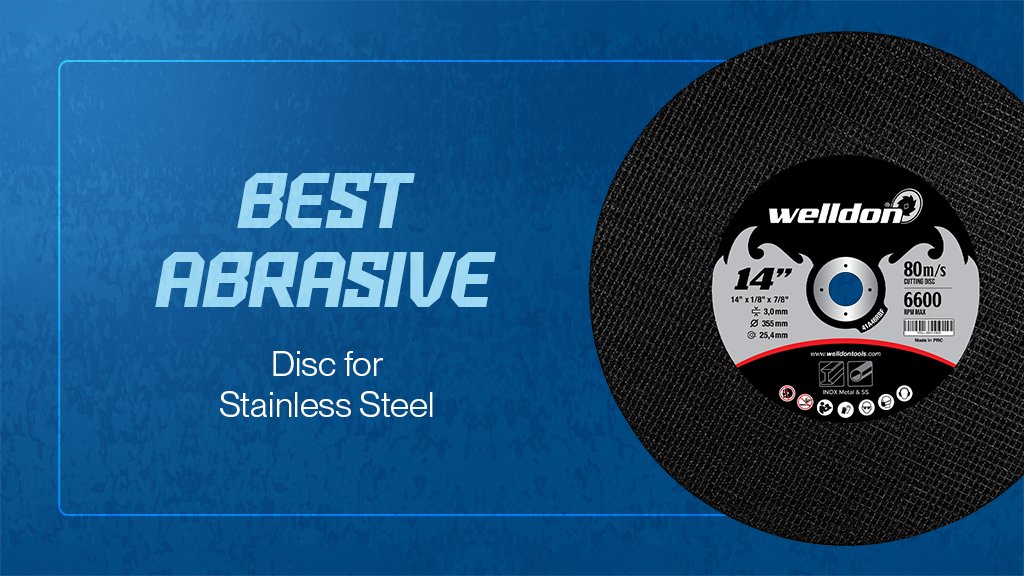
Stainless steel is one of the most widely used materials in fabrication, construction, food processing equipment, architecture, and industrial manufacturing. It offers corrosion resistance, strength, and a clean aesthetic finish. However, working with stainless steel requires precision—especially when cutting, grinding, or finishing.
Using the wrong abrasive disc can result in:
- Surface burns and discoloration
- Deep scratches
- Warping due to heat buildup
- Contamination that leads to rust
If your goal is clean, professional results with no burns and no scratches, choosing the best abrasive disc for stainless steel is critical.
In this guide, you’ll learn which types of abrasive discs work best, how to avoid common mistakes, and how to achieve smooth, professional finishes on stainless steel surfaces.
Why Stainless Steel Requires Special Abrasives
Stainless steel behaves differently from mild steel. While it looks similar, its properties demand a more careful approach.
Heat Sensitivity
Stainless steel retains heat. When grinding or cutting, friction generates high temperatures. If heat is not controlled:
- Blue or brown burn marks appear
- Surface corrosion resistance may weaken
- Warping can occur on thin sheets
This is why selecting a no-burn grinding disc is essential.
Risk of Contamination
Regular abrasive discs designed for carbon steel may contain iron particles. When used on stainless steel, these particles can embed into the surface and eventually cause rust.
Always use discs labeled:
- INOX
- Iron-free
- Stainless steel approved
These discs prevent cross-contamination and protect corrosion resistance.
Surface Finish Matters
In stainless steel applications—especially food-grade equipment, railings, or architectural elements—the finish is critical. Scratches and swirl marks reduce quality and increase polishing time.
The right stainless steel grinding disc ensures a smooth finish with minimal rework.
Types of Abrasive Discs for Stainless Steel
Choosing the best abrasive disc depends on the application: cutting, weld removal, blending, or polishing.
Cutting Discs for Stainless Steel
Thin cutting discs specifically designed for stainless steel are ideal for clean, fast cuts.
Key Features:
- Thin profile (1.0–1.6 mm)
- Iron-free composition
- Reduced friction and heat buildup
These discs produce:
- Minimal burr formation
- Less discoloration
- Faster cutting speed
Best used for:
- Stainless steel sheets
- Tubes and pipes
- Thin structural components
Thin stainless steel cutting discs reduce heat buildup and lower the risk of burning edges.
Flap Discs for Stainless Steel
Flap discs are among the most versatile options for grinding and finishing stainless steel.
They consist of overlapping abrasive flaps attached to a backing plate, allowing controlled material removal and smoother finishing compared to traditional grinding wheels.
Zirconia Flap Discs
- Durable
- Good for medium grinding
- Suitable for weld blending
Ceramic Flap Discs
- Higher cutting efficiency
- Cooler grinding action
- Longer lifespan
- Ideal for heavy stainless steel fabrication
For no-burn results, ceramic flap discs are often the best abrasive disc for stainless steel in demanding applications.
Fiber Discs
Fiber discs are flat abrasive discs used with backing pads. They are aggressive and excellent for removing weld seams quickly.
Advantages:
- High material removal rate
- Excellent for heavy weld grinding
- Available in ceramic or zirconia
However, they require proper pressure control to avoid surface scratches.
Best for:
- Large fabrication shops
- Industrial stainless steel work
- Heavy stock removal
Grinding Wheels
Traditional grinding wheels can be used for stainless steel, but only if they are specifically rated for INOX applications.
Compared to flap discs, grinding wheels:
- Remove material aggressively
- Generate more heat
- Require more skill to avoid burns
They are best suited for heavy material removal rather than finishing work.
Non-Woven Surface Conditioning Discs
If your goal is scratch removal or fine finishing, non-woven discs are ideal.
These discs:
- Blend surfaces smoothly
- Remove minor imperfections
- Prepare stainless steel for polishing
They are commonly used after flap discs to achieve a uniform finish.
What Causes Burns and Scratches on Stainless Steel?
Understanding the problem helps prevent it.
Excessive Heat
Too much pressure or dull abrasives generate friction and heat, leading to burn marks.
Wrong Grit Size
Using coarse grit for finishing causes deep scratches that are difficult to remove.
Excessive Pressure
Let the abrasive do the work. Forcing the disc increases heat and reduces lifespan.
Incorrect RPM
Using a disc beyond its rated speed can cause overheating and unsafe conditions.
Non-INOX Discs
Using regular steel discs contaminates stainless steel and causes future corrosion.
How to Choose the Best Abrasive Disc for Stainless Steel
Selecting the right abrasive disc requires considering material type, disc composition, grit size, and application.
Check for INOX or Iron-Free Certification
- Always choose discs labeled INOX, stainless steel safe, or iron-free
- Prevents contamination that could cause rust
- Maintains corrosion resistance and stainless steel finish
Select the Right Abrasive Material
- Aluminum oxide: Good for light to medium grinding
- Zirconia: Durable, cool cutting, ideal for weld blending
- Ceramic: Aggressive, long-lasting, generates less heat
Ceramic and zirconia are generally the best abrasive discs for stainless steel, especially for weld removal and finishing
Choose the Correct Grit Size
- Coarse grit (36–60): Heavy weld removal or shaping
- Medium grit (80–120): Surface blending and smoothing
- Fine grit (180+): Polishing, finishing, and scratch-free results
- Proper grit selection avoids scratches and reduces burn risk
Consider Disc Thickness
- Thin discs (1–1.6 mm): Precise cuts, minimal heat
- Thicker discs: Longer lifespan, better for heavy grinding
Use thinner discs for cutting and thicker discs for weld removal or heavy stock removal
Match RPM and Tool Compatibility
- Check your grinder or cutting tool’s maximum RPM
- Using a disc beyond its rating risks overheating, disc shattering, and unsafe conditions
- Ensure the disc diameter fits your tool for secure operation
Best Abrasive Disc Recommendations by Application
Cutting Stainless Steel Sheets
- Thin, iron-free cutting discs (1.0–1.6 mm)
- INOX-certified for no contamination
- Produces clean, burn-free edges
Removing Weld Seams
- Ceramic or zirconia flap discs
- Medium to coarse grit (36–80)
- Controlled pressure prevents surface discoloration
Blending and Finishing Surfaces
- Flap discs with medium to fine grit
- Non-woven surface conditioning discs for uniform finish
- Use multiple passes instead of heavy pressure
Polishing Without Scratches
- Fine non-woven discs (180+)
- Ceramic polishing discs for high-quality, scratch-free finishes
Heavy-Duty Industrial Grinding
- Reinforced zirconia flap discs
- Designed for long sessions and heavy stock removal
- Cool cutting properties reduce heat and burns
Pro Tips to Avoid Burns and Discoloration
- Use light, consistent pressure – let the disc do the work
- Keep the disc moving – avoid concentrating heat in one area
- Avoid overheating – take breaks if cutting thick metal
- Use high-quality ceramic or zirconia discs – they cut efficiently and stay cooler
- Consider wet grinding if possible – reduces heat and sparks
Common Mistakes to Avoid
- Using regular steel discs on stainless steel
- Choosing overly coarse grit for finishing tasks
- Applying too much pressure, generating heat
- Ignoring maximum RPM ratings or safety instructions
- Overlooking INOX or iron-free certification
Avoiding these mistakes ensures burn-free, scratch-free results and extends disc life.
Safety Considerations
- Always wear PPE: gloves, goggles, ear protection, and dust masks
- Maintain a clean, stable work area
- Keep sparks away from flammable materials
- Check discs for cracks or wear before use
- Store discs flat in a dry environment to prevent warping
Following safety guidelines protects both the operator and the stainless steel surface.
Conclusion
Working with stainless steel requires careful material selection, proper grit, and high-quality abrasive discs. Using the best abrasive disc for stainless steel ensures:
- No burns or discoloration
- Scratch-free surfaces
- Efficient material removal
- Extended tool and disc life
For cutting, thin INOX discs are ideal. For weld removal or surface blending, ceramic or zirconia flap discs deliver professional results. For finishing and polishing, non-woven discs or fine ceramic discs achieve smooth, clean surfaces.
By understanding the properties of stainless steel, avoiding common mistakes, and following proper techniques, professionals and DIYers alike can achieve high-quality, burn-free results every time.