
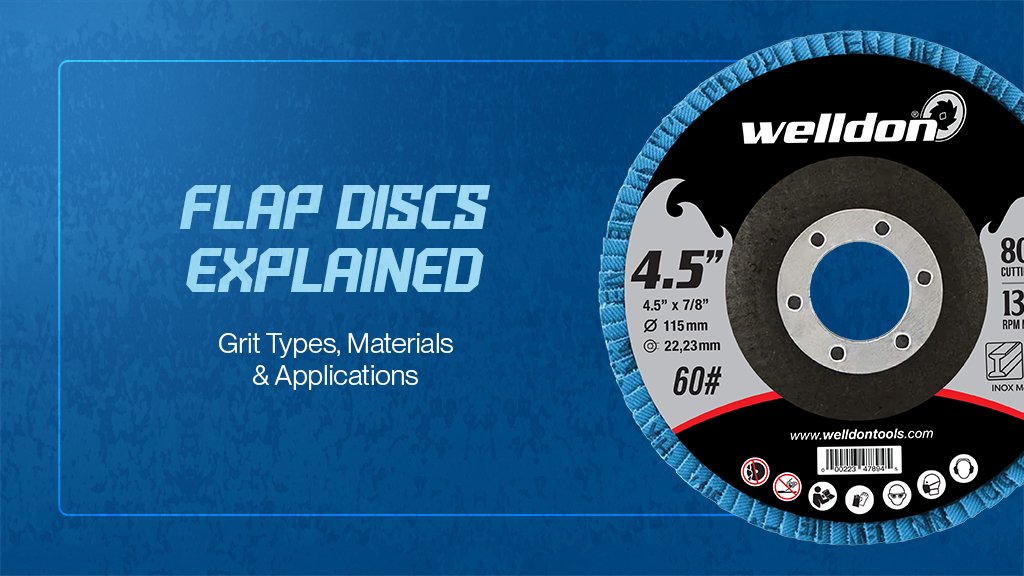
Flap discs have become one of the most widely used abrasives in metalworking, fabrication, construction, and industrial maintenance. Professionals prefer flap discs because they combine fast material removal with smooth finishing, eliminating the need to switch between multiple tools. Whether it is weld grinding, surface blending, rust removal, or edge finishing, flap discs offer efficiency, control, and consistency.
Unlike traditional grinding wheels, flap discs wear gradually, exposing fresh abrasive as they work. This results in a more uniform finish, better control, and reduced risk of gouging the surface. As industries demand higher productivity and cleaner results, flap discs have become an essential tool for both heavy-duty and precision applications.
This guide explains what flap discs are, the different grit types, abrasive materials, and where they are best used, helping you choose the right disc for professional results.
What Is a Flap Disc?
A flap disc is an abrasive tool designed for use with angle grinders. It consists of multiple overlapping abrasive flaps arranged radially around a backing plate. These flaps are typically made from coated abrasive material and are bonded securely to ensure durability during high-speed operation.
As the disc rotates, the flaps wear down gradually, constantly revealing fresh abrasive grains. This self-renewing action allows flap discs to maintain cutting performance throughout their lifespan. Unlike grinding wheels, which can lose effectiveness as they wear, flap discs provide consistent results from start to finish.
Flap discs are commonly used for:
- Grinding welds
- Blending metal surfaces
- Removing rust, paint, and scale
- Deburring sharp edges
- Finishing stainless steel and mild steel
Because they can both grind and finish, flap discs reduce tool changes, saving time and improving workflow efficiency.
Types of Flap Disc Grits Explained
Choosing the correct grit size is one of the most important factors in flap disc performance. Grit size determines how aggressively the disc removes material and how smooth the final surface will be.
Coarse Grit Flap Discs (24–40 Grit)
Coarse grit flap discs are designed for heavy material removal. They are ideal for:
- Grinding down weld seams
- Removing thick rust or scale
- Shaping metal surfaces
- Chamfering edges
These grits cut quickly and aggressively, making them suitable for structural steel, fabrication work, and industrial grinding. However, they leave a rougher surface finish, which may require follow-up with a finer grit.
Medium Grit Flap Discs (60–80 Grit)
Medium grit flap discs strike a balance between grinding and finishing. They are commonly used for:
- Weld blending
- Surface leveling
- Removing minor imperfections
- Preparing metal for coating or painting
These grits provide controlled material removal while producing a smoother finish than coarse grits. They are among the most versatile options for general metalworking tasks.
Fine Grit Flap Discs (120 Grit and Above)
Fine grit flap discs are used for finishing and surface refinement. Typical applications include:
- Final surface smoothing
- Light deburring
- Stainless steel finishing
- Preparing surfaces for polishing
Fine grits remove less material but deliver a clean, uniform finish. They are especially useful when appearance and precision are important.
Flap Disc Abrasive Materials
The performance of a flap disc depends heavily on the abrasive material used. Different materials offer varying levels of durability, cutting speed, and heat resistance.
Aluminum Oxide Flap Discs
Aluminum oxide is the most commonly used abrasive material. It is cost-effective and suitable for general-purpose applications.
Best suited for:
- Mild steel
- Carbon steel
- General fabrication work
Aluminum oxide flap discs provide reliable performance but wear faster than premium abrasives under heavy loads.
Zirconia Flap Discs
Zirconia flap discs are designed for high-performance grinding. They are tougher than aluminum oxide and offer better heat resistance.
Best suited for:
- Heavy grinding applications
- Structural steel
- High-pressure grinding tasks
Zirconia abrasives are self-sharpening, meaning they maintain cutting efficiency longer and provide extended disc life.
Ceramic Flap Discs
Ceramic flap discs represent the highest performance category. They are engineered for maximum cutting speed and durability.
Best suited for:
- Stainless steel
- High-alloy metals
- Intensive industrial grinding
Ceramic abrasives stay cooler during operation, reducing heat buildup and minimizing the risk of discoloration or warping.
Backing Materials in Flap Discs
The backing plate of a flap disc plays a critical role in stability, safety, and performance.
Fiberglass Backing
Fiberglass backing is lightweight, strong, and impact-resistant. It is the most commonly used backing material and is suitable for most grinding and finishing applications.
Plastic Backing
Plastic-backed flap discs offer flexibility and are often used for lighter applications. They provide smoother control but may not be suitable for heavy grinding.
Metal Backing
Metal backing plates are designed for heavy-duty use. They provide maximum stability but are less common due to increased weight and reduced flexibility.
Common Applications of Flap Discs
Flap discs are used across multiple industries due to their versatility.
Weld Grinding and Blending
Flap discs are ideal for smoothing weld seams without damaging surrounding material. Medium to coarse grits are typically used, depending on weld size and material.
Surface Preparation
Before painting, coating, or welding, surfaces must be clean and smooth. Flap discs effectively remove rust, paint, and oxidation.
Rust and Paint Removal
Flap discs remove surface contaminants quickly while maintaining control, making them suitable for maintenance and refurbishment work.
Flap Discs vs Grinding Wheels
Flap discs are often compared with traditional grinding wheels because both are used for metal removal. However, there are key differences:
- Performance: Flap discs provide both grinding and finishing in a single step, while grinding wheels focus purely on material removal.
- Surface Finish: Flap discs leave a smoother finish, reducing the need for follow-up sanding or polishing.
- Tool Life: Because flap discs wear gradually and expose fresh abrasive layers, they maintain consistent performance longer than many grinding wheels.
- Cost Efficiency: Fewer tool changes and less rework make flap discs more cost-effective in long-term applications.
Key takeaway: Choose flap discs when you need a balance of efficiency and surface quality. Grinding wheels are better suited for aggressive cutting or shaping where finish is less important.
How to Choose the Right Flap Disc
Selecting the correct flap disc is critical to achieving professional results safely. Here are the main factors to consider:
1. Matching Grit Size to Application
- Coarse (24–40 grit): Heavy material removal and weld grinding
- Medium (60–80 grit): Surface blending and leveling
- Fine (120+ grit): Finishing and polishing
Always select the grit based on material thickness, job type, and desired finish.
2. Choosing Abrasive Type
- Aluminum oxide: General-purpose, cost-effective, suitable for mild steel
- Zirconia: High-performance, long-lasting, suitable for tough metals
- Ceramic: Premium industrial applications, fastest material removal, reduces heat
3. Backing Plate & Disc Diameter
- Ensure disc diameter matches your angle grinder
- Check backing material compatibility for stability and safety
- Consider maximum RPM rating of the disc to avoid accidents
Safety Tips for Using Flap Discs
Even with high-quality flap discs, safety is paramount. Follow these precautions:
- Wear personal protective equipment (PPE): gloves, eye protection, and face shield
- Inspect discs for cracks or damage before each use
- Mount the disc securely on the grinder
- Maintain the correct grinding angle (usually 5–15°)
- Avoid excessive pressure, let the disc do the work
- Keep sparks away from flammable materials
Following these practices ensures longer disc life, better results, and reduced risk of injury.
Why Quality Flap Discs Matter
Using cheap or low-quality flap discs may save money upfront, but they often lead to frustration, inefficiency, and safety hazards:
- Inconsistent performance: uneven grinding or finish
- Shorter lifespan: more frequent replacements
- Higher safety risk: low-quality discs can shatter under high pressure
High-quality flap discs, like those from Welldon, offer:
- Consistent material removal
- Smooth, uniform finishes
- Longer tool life
- Trusted industrial-grade reliability
Investing in quality ensures professional results and safer operations, especially in industrial settings.
Conclusion
Flap discs are essential tools for metalworking and fabrication, offering a unique combination of grinding and finishing in one tool. By understanding the followings, professionals can maximize efficiency, improve surface quality, and maintain safety in their work.:
- Different grit types (coarse, medium, fine)
- Various abrasive materials (aluminum oxide, zirconia, ceramic)
- Proper backing materials and disc compatibility
Whether you’re grinding welds, preparing surfaces, removing rust, or finishing stainless steel, choosing the right flap disc makes a noticeable difference. High-quality flap discs, like those offered by Welldon, provide durability, consistency, and safety for both industrial and workshop applications.
With the right knowledge and tools, flap discs can transform metalworking projects—reducing time, improving quality, and ensuring reliable results every time.