
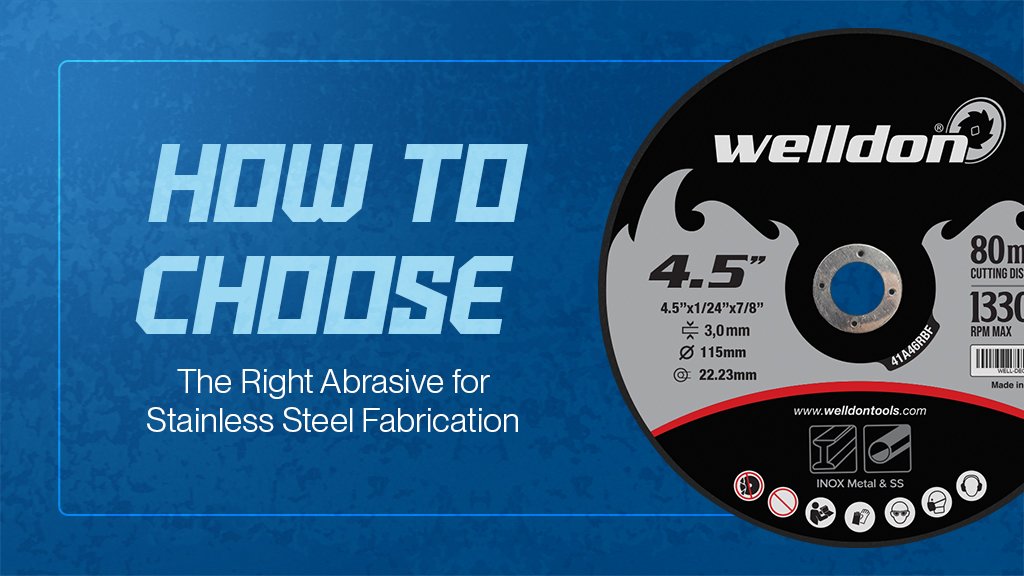
Stainless steel is widely used across industries because of its strength, corrosion resistance, and clean finish. From food processing equipment and pharmaceutical machinery to architectural structures and automotive components, stainless steel plays a critical role in modern manufacturing.
However, working with stainless steel is very different from working with mild steel or carbon steel. It generates more heat during grinding and cutting, is prone to surface discoloration, and can become contaminated if improper abrasives are used.
Choosing the right abrasive for stainless steel fabrication is essential to maintain surface quality, prevent rust contamination, and ensure efficient material removal. In this complete guide, we’ll explain how to select the best abrasive for stainless steel cutting, grinding, blending, and finishing.
Why Stainless Steel Requires Special Abrasives
Before selecting an abrasive, it’s important to understand why stainless steel needs special consideration.
Heat Sensitivity
Stainless steel has low thermal conductivity. This means heat builds up quickly during grinding or cutting. Excess heat can cause:
- Blue or brown burn marks
- Surface warping
- Reduced corrosion resistance
Using the wrong abrasive increases friction and heat, leading to poor results.
Surface Contamination Risk
Regular abrasive discs used on carbon steel may contain iron particles. If these particles transfer onto stainless steel, they can cause:
- Rust spots
- Corrosion
- Surface defects
That’s why iron-free (INOX) abrasives are strongly recommended.
Work Hardening
Stainless steel tends to harden when exposed to excessive pressure or heat. This makes further grinding more difficult and reduces efficiency. High-performance abrasives are designed to cut cleanly without causing work hardening.
Key Factors to Consider When Choosing an Abrasive
Selecting the best abrasive for stainless steel fabrication depends on several critical factors.
Abrasive Material (Grain Type)
The type of abrasive grain determines cutting speed, durability, and heat generation.
Ceramic Abrasives
Ceramic grains are ideal for stainless steel because they:
- Are self-sharpening
- Provide aggressive cutting
- Generate less heat
- Offer long service life
They are perfect for heavy grinding and high-production environments.
Zirconia Alumina
Zirconia abrasives are durable and suitable for:
- Weld removal
- Medium to heavy grinding
- Industrial stainless steel fabrication
They offer a good balance between performance and cost.
Aluminum Oxide
Aluminum oxide can be used for lighter tasks but may wear faster on stainless steel compared to ceramic or zirconia options.
For professional fabrication work, ceramic and zirconia are generally better choices.
Iron-Free (INOX) Certification
One of the most important factors when selecting an abrasive for stainless steel fabrication is ensuring it is iron-free.
What Does Iron-Free Mean?
Iron-free (INOX) abrasives do not contain:
- Iron
- Sulfur
- Chlorine
These contaminants can damage stainless steel surfaces.
Why It Matters
Iron contamination can compromise corrosion resistance, especially in industries such as:
- Food processing
- Pharmaceutical manufacturing
- Marine applications
- Architectural stainless steel
Always check that the disc is labeled for stainless steel or INOX use.
Grit Size Selection
Grit size affects both material removal rate and surface finish.
Coarse Grit (24–40)
Best for:
- Heavy weld removal
- Rapid stock removal
Provides aggressive cutting but leaves rougher surfaces.
Medium Grit (60–80)
Ideal for:
- Blending weld seams
- Surface leveling
Offers a balance between removal and finish.
Fine Grit (100–120 and above)
Used for:
- Surface finishing
- Scratch removal
- Pre-polishing
Choosing the correct grit progression ensures smooth and professional results.
Bond Type
Bonding material plays a major role in heat resistance and flexibility.
Resin Bond Abrasives
Resin bond abrasives are commonly used for stainless steel because they:
- Handle high speeds
- Provide flexibility
- Resist heat buildup
- Reduce vibration
They are widely used in cutting discs, grinding wheels, and flap discs.
Manufacturers such as Welldon Abrasives produce iron-free resin bond abrasives designed specifically for stainless steel fabrication.
Disc Type Selection
Different tasks require different disc types.
- Cutting discs for slicing stainless sheets and pipes
- Grinding wheels for weld removal
- Flap discs for blending and finishing
- Fiber discs for aggressive grinding
- Non-woven discs for surface conditioning
Selecting the correct disc type improves both productivity and precision.
Best Abrasive Types for Stainless Steel Fabrication
Choosing the right abrasive also depends on the specific task you are performing. Stainless steel fabrication usually involves cutting, grinding, blending, and finishing. Each stage requires a different approach.
Cutting Stainless Steel
For cutting stainless steel sheets, pipes, or rods, always use thin INOX cutting discs.
Key Recommendations:
- Choose iron-free cutting discs
- Use thin discs (1.0mm–1.5mm) for cleaner cuts
- Ensure RPM compatibility with your angle grinder
Thin discs reduce friction, which minimizes heat buildup and prevents discoloration.
Grinding Welds
Weld removal is one of the most common tasks in stainless steel fabrication.
Best Options:
- Zirconia grinding discs
- Ceramic grinding discs
These materials provide aggressive cutting while maintaining durability. Avoid using excessive pressure, as this can cause overheating and surface damage.
Surface Blending and Finishing
After weld grinding, blending is necessary to achieve a smooth, uniform finish.
Recommended Tools:
- Flap discs (60–120 grit depending on finish requirement)
- Non-woven surface conditioning discs
Flap discs are especially popular because they combine grinding and finishing in one tool, reducing disc changes and improving efficiency.
Polishing Stainless Steel
For decorative or architectural stainless steel, polishing is essential.
Use:
- Fine grit abrasives (120 and above)
- Non-woven polishing discs
- Proper grit progression
Skipping grit levels can result in visible scratches and uneven surfaces.
How to Prevent Burns and Discoloration
Burn marks are a common issue when grinding stainless steel. These appear as blue or brown stains caused by excessive heat.
To prevent this:
- Use sharp, high-quality abrasives
- Choose ceramic or zirconia grains
- Maintain a proper grinding angle (typically 10–15 degrees for flap discs)
- Apply light, consistent pressure
- Keep the disc moving continuously
- Avoid staying in one spot for too long
Allowing the metal to cool between passes also helps maintain corrosion resistance.
Common Mistakes to Avoid
Even experienced fabricators sometimes make errors that affect quality and efficiency.
Using Standard Steel Discs
Never use discs previously used on carbon steel. This can transfer iron particles and cause rust contamination.
Applying Too Much Pressure
Excessive pressure increases heat and causes premature disc wear.
Ignoring RPM Ratings
Using discs beyond their rated speed can lead to safety hazards and reduced performance.
Skipping Grit Progression
Jumping from coarse to very fine grit without intermediate steps results in poor finishing quality.
Using Low-Quality Abrasives
Cheap abrasives often wear quickly and generate more heat, increasing long-term costs.
Industry Applications
Choosing the right abrasive for stainless steel fabrication is critical in many industries.
Food Processing Equipment
Surfaces must remain contamination-free and corrosion-resistant.
Pharmaceutical Manufacturing
Precision finishing and hygiene standards are extremely important.
Architectural Stainless Steel
Visible surfaces require flawless finishing and consistent texture.
Automotive Exhaust Systems
Heat resistance and durability are essential.
Marine Applications
Corrosion resistance must not be compromised.
In all these sectors, iron-free, high-performance abrasives ensure durability and surface integrity.
Safety and Best Practices
Safety should always be a priority when working with stainless steel abrasives.
- Wear safety goggles, gloves, and a dust mask
- Inspect discs before use for cracks or damage
- Secure the workpiece properly
- Use tools at recommended speeds
- Store abrasives in dry conditions to prevent damage
Following proper safety practices improves both performance and operator protection.
Conclusion
Choosing the right abrasive for stainless steel fabrication directly impacts productivity, surface quality, and long-term durability. Because stainless steel is sensitive to heat and contamination, it requires iron-free abrasives designed specifically for INOX applications.
When selecting an abrasive, always consider:
- Abrasive grain type (ceramic or zirconia preferred)
- Iron-free certification
- Proper grit size
- Suitable bond type
- Correct disc selection for each task
Using high-quality abrasives ensures cleaner cuts, smoother finishes, reduced heat buildup, and improved corrosion resistance.
Manufacturers such as Welldon Abrasives offer specialized stainless steel abrasive solutions designed to meet industrial performance standards.
By understanding these key factors, fabricators can achieve professional results while maximizing efficiency and safety in every stainless steel project.