
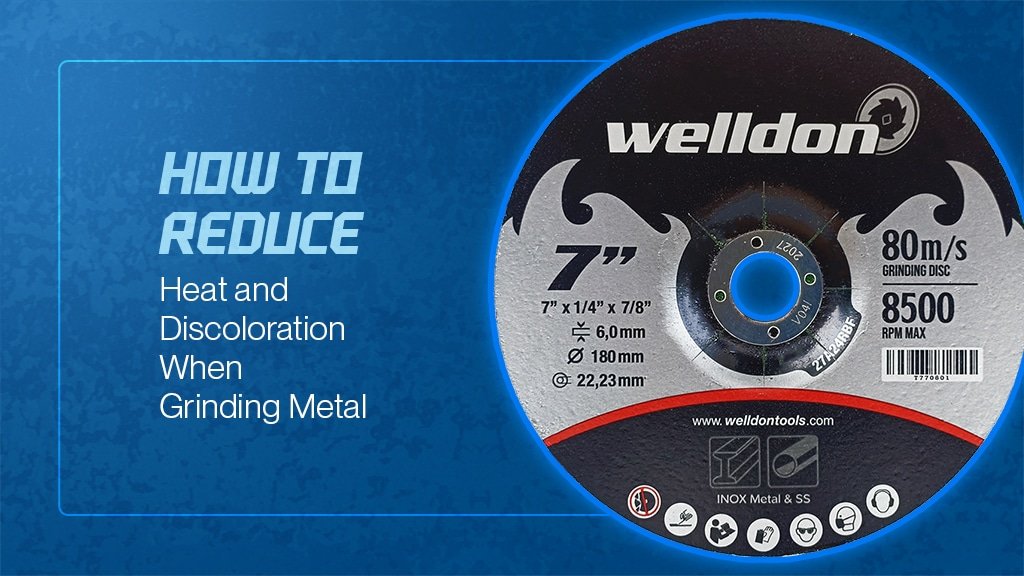
Grinding is one of the most common processes used in metal fabrication, manufacturing, and industrial maintenance. Whether removing welds, smoothing edges, or preparing surfaces for finishing, grinding helps shape and refine metal components quickly and efficiently.
However, one of the biggest challenges during grinding is heat buildup. Excessive heat can cause metal discoloration, burn marks, surface damage, and reduced material strength. This issue is especially critical when grinding stainless steel, where overheating can affect corrosion resistance and appearance.
Understanding how to reduce heat when grinding metal is essential for achieving clean finishes, maintaining metal integrity, and improving abrasive performance. In this guide, we will explore the causes of heat buildup, the problems it creates, and the best techniques to prevent discoloration and overheating during grinding.
Why Heat Is Generated During Grinding
Grinding involves friction between abrasive grains and the metal surface. As the abrasive disc removes material, the friction produces heat. While some heat generation is normal, excessive heat can lead to surface damage and discoloration.
Several factors contribute to heat buildup during grinding.
One of the most common causes is excessive pressure. When operators press too hard on the grinder, friction increases significantly. Instead of cutting efficiently, the abrasive begins rubbing against the surface, producing more heat.
Another major factor is using the wrong abrasive disc. Some discs are not designed for certain materials, which leads to inefficient cutting and higher temperatures.
Grinding angle also plays an important role. Incorrect angles increase friction and reduce cutting efficiency, causing more heat to accumulate on the metal surface.
Finally, worn or clogged abrasive discs often generate excessive heat. When abrasive grains become dull or loaded with material, they cannot cut effectively. This results in rubbing rather than grinding.
Problems Caused by Excessive Heat
Heat buildup during grinding creates several issues that can affect both product quality and manufacturing efficiency.
Metal Discoloration
One of the most visible problems is discoloration. Overheating causes metal surfaces to change color, often producing blue, brown, or rainbow marks. These marks are commonly referred to as heat tint or burn marks.
While discoloration may appear cosmetic, it can indicate deeper metallurgical changes in the material.
Surface Damage
Excessive heat can cause microscopic cracks and weaken the surface structure of metal components. These micro defects can compromise durability and long-term performance.
Reduced Corrosion Resistance
This issue is especially serious when grinding stainless steel. Heat buildup can damage the protective chromium oxide layer on the surface, making the metal more susceptible to corrosion.
Poor Surface Finish
Heat damage often leads to uneven surfaces and visible burn marks. In industries where visual appearance matters, such as automotive or decorative metal fabrication, this can result in rejected parts.
Choose the Right Abrasive Disc
Selecting the correct abrasive disc is one of the most effective ways to reduce heat during grinding.
Different abrasive materials are designed for different cutting behaviors. High-performance abrasives remove material faster, which reduces friction and minimizes heat generation.
Flap discs are commonly used for controlled grinding and blending. Their layered abrasive design allows them to cut efficiently while maintaining cooler operating temperatures.
Ceramic abrasives are another excellent option. They are known for their fast cutting performance and ability to stay sharp longer. Because ceramic grains fracture during use, new sharp edges are constantly exposed, allowing cooler grinding.
Zirconia abrasives are also widely used in heavy grinding applications. They provide durability and efficient cutting performance, especially when working with steel and stainless steel.
Choosing high-quality abrasives specifically designed for the material being processed significantly reduces the risk of overheating.
Use the Correct Grit Size
Grit size has a major influence on heat generation.
Coarse grit abrasives remove material quickly and generate less friction. They are typically used for heavy stock removal and weld grinding.
Medium grit abrasives are ideal for blending and smoothing surfaces after initial grinding.
Fine grit abrasives are used for finishing applications, but they can generate more heat if used for heavy material removal.
Using the correct grit progression is important. Starting with coarse grit and gradually moving to finer grits ensures efficient material removal while maintaining good surface quality.
Trying to remove large amounts of material with a fine grit disc often results in excessive heat buildup.
Maintain Proper Grinding Pressure
One of the most common mistakes operators make is applying too much pressure when grinding.
Many people believe that pressing harder will remove material faster. In reality, excessive pressure causes the abrasive to rub instead of cut.
Abrasive grains are designed to perform the cutting action. Allowing the abrasive to do the work reduces friction and helps maintain cooler grinding temperatures.
Applying steady and moderate pressure ensures efficient grinding while minimizing heat buildup.
Use the Correct Grinding Angle
Grinding angle affects both cutting performance and heat generation.
For most grinding discs, maintaining an angle between 15 and 30 degrees is recommended. This angle allows the abrasive grains to engage the metal surface effectively while minimizing friction.
Holding the grinder too flat against the surface increases contact area, which generates more heat.
On the other hand, holding the grinder at an excessively steep angle can reduce cutting efficiency and cause uneven grinding.
Maintaining the correct angle improves both grinding performance and surface finish.
Control Grinding Speed and RPM
Grinding tools operate at high rotational speeds, and excessive RPM can increase friction and heat buildup.
Using the correct speed for the abrasive disc and material is essential.
Each abrasive disc is designed to operate within a specific speed range. Exceeding the recommended speed can cause overheating and reduce disc lifespan.
Using grinders with adjustable speed settings can help operators maintain optimal grinding conditions.
Matching the disc speed with the material and application improves cutting performance while reducing heat generation.
Use Intermittent Grinding Techniques
Continuous grinding in one spot can quickly generate excessive heat.
Instead of holding the grinder in a single location for an extended period, operators should use short, controlled grinding passes.
Moving the grinder across the surface allows heat to dissipate and prevents localized overheating.
Allowing brief cooling intervals between passes also helps maintain lower temperatures during grinding operations.
This technique is particularly important when grinding heat-sensitive materials like stainless steel.
Keep the Disc Clean and Sharp
Clogged abrasive discs significantly increase heat generation.
When grinding softer metals such as aluminum, material can become trapped between abrasive grains. This phenomenon is known as loading.
Loaded abrasives lose their cutting ability and begin rubbing against the surface instead of cutting.
Regularly inspecting abrasive discs and replacing worn or clogged discs ensures efficient cutting and cooler grinding.
Sharp abrasive grains remove material more effectively and produce less friction.
Cooling Methods Used in Industrial Grinding
In heavy industrial environments, cooling techniques are often used to control grinding temperatures.
Air cooling is the simplest method. Allowing natural airflow around the grinding area helps dissipate heat.
Some industrial operations use coolant systems that deliver liquid cooling to the grinding surface. Coolants help absorb heat and improve surface finish.
Wet grinding is another method used in certain applications. The presence of water reduces friction and helps maintain lower temperatures.
While these techniques are more common in large-scale industrial grinding, the principles of cooling and heat control remain relevant for all grinding operations.
Common Mistakes That Cause Metal Burns
Understanding common grinding mistakes can help operators prevent heat damage.
Using worn-out abrasive discs is one of the most frequent problems. Dull abrasives generate excessive friction and heat.
Grinding in one spot for too long also leads to overheating. Constant movement is essential for heat control.
Using the wrong abrasive for the material can reduce cutting efficiency and increase friction.
Applying excessive pressure forces the abrasive into the metal surface, creating unnecessary heat.
Avoiding these mistakes improves grinding results and extends abrasive lifespan.
Applications Where Heat Control Is Critical
Heat control during grinding is especially important in several industries.
Stainless steel fabrication requires careful grinding to maintain corrosion resistance and appearance.
Automotive manufacturing depends on smooth, burn-free surfaces before painting and coating.
Aerospace components require precision grinding without damaging material integrity.
Decorative metal finishing also demands clean surfaces without discoloration or burn marks.
In all these industries, controlling grinding heat ensures both performance and visual quality.
Safety and Best Practices
Grinding operations should always follow proper safety practices.
Operators should wear personal protective equipment such as gloves, eye protection, and face shields.
Using high-quality abrasive discs designed for specific applications improves both safety and performance.
Regular inspection of grinders and discs helps prevent accidents caused by damaged tools.
Following manufacturer guidelines ensures that grinding operations remain safe and efficient.
Conclusion
Heat buildup during grinding is a common challenge in metal fabrication and manufacturing. Excessive heat can cause discoloration, surface damage, and reduced corrosion resistance, especially when working with stainless steel.
Fortunately, controlling heat during grinding is achievable with the right techniques and tools.
Selecting high-quality abrasive discs, using the correct grit size, maintaining proper grinding angles, and avoiding excessive pressure all contribute to cooler grinding conditions.
Operators should also adopt intermittent grinding techniques, monitor tool speed, and replace worn abrasives regularly.
By understanding the causes of heat buildup and applying best practices, manufacturers can achieve cleaner finishes, extend abrasive life, and improve overall productivity.