
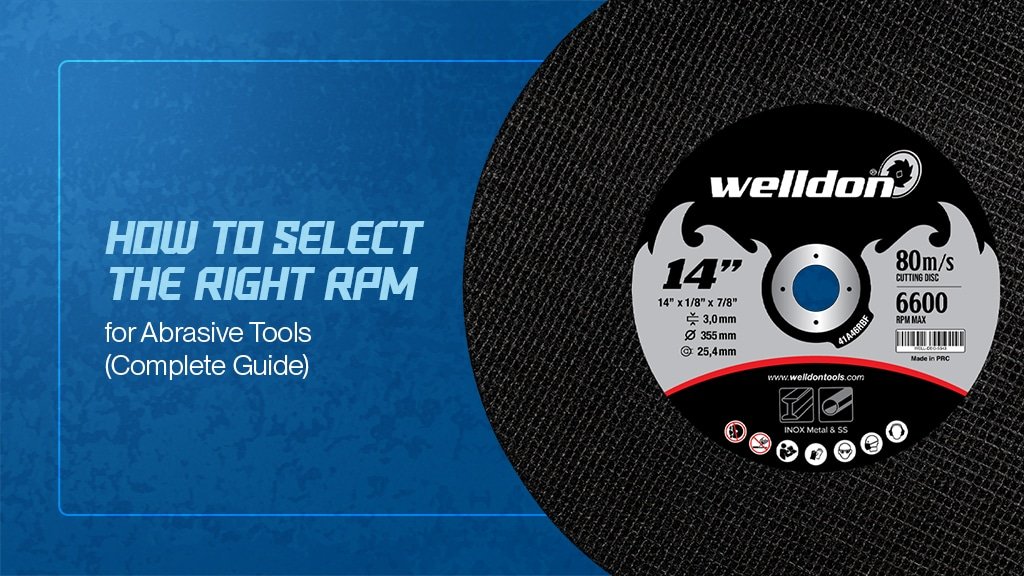
Choosing the right abrasive tool is important—but selecting the correct RPM (Revolutions Per Minute) is just as critical. Whether you’re cutting, grinding, or finishing metal, the wrong RPM can lead to poor performance, faster disc wear, or even serious safety hazards.
In industrial environments where precision and safety matter, understanding RPM is not optional—it’s essential. Many operators overlook RPM ratings, assuming all discs will work at any speed. In reality, mismatched RPM is one of the leading causes of abrasive disc failure.
In this guide, you’ll learn how to select the right RPM for abrasive tools, how to match discs with machines, and how to ensure both safety and efficiency in your operations.
What is RPM in Abrasive Tools?
RPM stands for Revolutions Per Minute, which measures how many times a tool or disc rotates in one minute.
In abrasive applications, RPM determines:
- How fast the disc spins
- How aggressively material is removed
- How much heat is generated
It’s important to understand that every abrasive disc has a maximum RPM rating, and every machine (like an angle grinder) operates at a specific speed.
The key rule is simple:
The tool’s RPM must never exceed the disc’s maximum RPM rating.
Why RPM Matters in Abrasive Applications
Safety Comes First
The most important reason to select the correct RPM is safety. Abrasive discs are designed to operate within specific speed limits. Exceeding these limits can cause the disc to break apart during operation.
At high speeds, a damaged or overloaded disc can shatter, creating serious risks for the operator and nearby workers.
Improved Performance
Correct RPM ensures that the abrasive tool performs as intended. When RPM is properly matched:
- Cutting becomes smoother and faster
- Grinding is more controlled
- Surface finish improves
Using the wrong RPM often results in inefficient cutting and inconsistent results.
Longer Tool and Disc Life
Incorrect RPM accelerates wear and tear. High speeds can overheat the disc, while low speeds can reduce cutting efficiency.
Matching the correct RPM helps:
- Extend disc lifespan
- Reduce replacement costs
- Improve overall productivity
Understanding Maximum RPM Ratings on Abrasive Discs
Every abrasive disc is labeled with a maximum RPM rating. This information is typically printed on the disc itself.
This rating indicates the highest safe speed at which the disc can operate.
Exceeding this limit can lead to:
- Structural failure of the disc
- Increased vibration
- Dangerous operating conditions
Manufacturers test abrasive discs under controlled conditions to determine these limits, so they should always be followed strictly.
How to Match Tool RPM with Abrasive Disc
Check the Tool’s No-Load Speed
Every grinder or cutting machine has a no-load RPM, which indicates the maximum speed the tool can reach without resistance.
You can usually find this information:
- On the tool label
- In the user manual
Compare with Disc Rating
Once you know the tool’s RPM, compare it with the disc’s maximum RPM.
Golden Rule:
The disc’s RPM rating must be equal to or higher than the tool’s RPM.
Choose the Right Disc Size
Disc size directly affects RPM compatibility.
- Smaller discs (4”–5”) operate at higher RPM
- Larger discs (7” and above) operate at lower RPM
Using a larger disc on a high-speed tool is unsafe and should be avoided.
RPM Guidelines for Common Abrasive Tools
Angle Grinders
Angle grinders are the most commonly used abrasive tools.
Typical RPM ranges:
- 4”–5” grinders: 10,000–12,000 RPM
- 7” grinders: 6,000–8,500 RPM
Always ensure the disc matches the grinder’s speed.
Bench Grinders
Bench grinders operate at fixed speeds, usually between 3,000 and 3,600 RPM.
Since the RPM is constant, selecting the right grinding wheel is critical.
Cut-Off Machines
Cut-off machines are designed for high-speed cutting applications and often operate at higher RPMs than standard grinders.
These tools require specially designed cutting discs that can handle high rotational speeds.
RPM Differences Based on Disc Type
Cutting Discs
Cutting discs are thin and designed for high-speed operation. They typically have higher RPM ratings compared to grinding discs.
Grinding Discs
Grinding discs are thicker and designed for material removal rather than speed. Their RPM limits are generally lower than cutting discs.
Flap Discs
Flap discs operate at moderate RPM levels and provide both grinding and finishing capabilities.
Diamond Blades
Diamond blades are used for cutting hard materials like concrete and stone. Their RPM depends on the material and blade design.
Impact of Disc Size on RPM
Disc diameter plays a major role in determining safe RPM.
Here’s a simple principle:
The larger the disc, the lower the maximum RPM.
For example:
- 4” disc → higher RPM capacity
- 7” disc → lower RPM limit
This is because larger discs generate more centrifugal force when spinning, increasing the risk of failure at high speeds.
Signs You Are Using the Wrong RPM
Using incorrect RPM often shows clear warning signs.
Watch out for:
- Excessive vibration
- Burning marks or discoloration
- Faster-than-normal disc wear
- Poor cutting or grinding performance
If you notice any of these issues, stop the tool and check RPM compatibility immediately.
Safety Tips for RPM Selection
Safety should always be a top priority when working with abrasive tools.
Follow these best practices:
- Never exceed the disc’s maximum RPM
- Always inspect discs before use
- Use proper guards on tools
- Wear personal protective equipment (PPE)
- Follow manufacturer guidelines
These simple steps can prevent accidents and ensure smooth operations.
Common Mistakes to Avoid
Even experienced operators sometimes make RPM-related mistakes.
Avoid the following:
- Using oversized discs on small grinders
- Ignoring RPM labels on discs
- Removing safety guards
- Using damaged or worn discs
- Modifying tools to fit incompatible discs
These mistakes can lead to serious safety risks and reduced efficiency.
Tips for Optimizing Performance with Correct RPM
To get the best results from your abrasive tools:
- Match RPM with the material you are working on
- Use the correct disc type for the job
- Apply consistent pressure while working
- Replace worn discs regularly
- Use high-quality abrasive products
Proper RPM selection combined with the right technique improves both performance and safety.
Conclusion
Selecting the right RPM for abrasive tools is essential for safe and efficient operations. From preventing accidents to improving cutting performance, RPM plays a critical role in every abrasive application.
By understanding disc ratings, matching them with tool speeds, and following safety guidelines, operators can ensure better results and longer tool life.
In industrial environments where precision and reliability matter, paying attention to RPM is not just a recommendation—it’s a necessity.
Need Reliable, High-Performance Abrasives for Your Operations?
Choosing the right RPM is only part of the equation. To achieve consistent performance and safety, you also need high-quality abrasive products you can trust.
Welldon Abrasives supplies industrial-grade cutting discs, grinding wheels, flap discs, and more—engineered to meet strict safety standards and deliver reliable performance at rated RPM levels.
When you partner with Welldon, you get:
- Abrasives tested for safe and stable RPM performance
- Consistent quality across bulk orders
- A wide product range for multiple industrial applications
- Competitive pricing for manufacturers and distributors
- OEM and private label solutions
Whether you are a manufacturer, contractor, or distributor, Welldon provides dependable abrasive solutions designed for real-world industrial use.
Contact Welldon today to explore bulk supply options and find the right abrasive products for your business.