
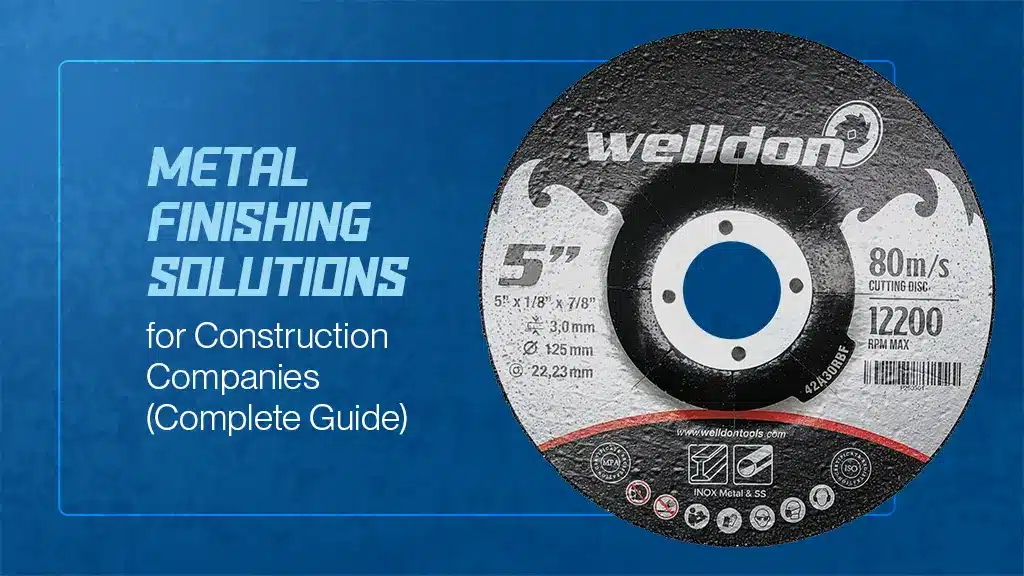
In the construction industry, metal is everywhere—structural beams, railings, frames, fixtures, and architectural elements all rely on metal for strength and functionality. But raw metal alone is not enough. Without proper finishing, even the strongest materials can deteriorate, corrode, or fail to meet aesthetic standards.
This is where metal finishing solutions for construction companies become essential.
Metal finishing is not just about appearance—it directly impacts durability, safety, and long-term performance. Whether preparing steel for protective coatings or polishing stainless steel for architectural appeal, the right finishing process ensures that structures withstand harsh environmental conditions while maintaining their visual quality.
For contractors, project managers, and procurement teams, investing in the right finishing solutions is a strategic decision that enhances project outcomes and reduces long-term maintenance costs.
What is Metal Finishing?
Metal finishing refers to a range of processes used to modify the surface of metal components to improve their performance and appearance.
These processes include:
- Grinding and smoothing
- Surface preparation
- Polishing and buffing
- Coating preparation
The main objectives of metal finishing are:
- Improving surface quality
- Enhancing corrosion resistance
- Preparing surfaces for painting or coating
- Ensuring safety by removing sharp edges and defects
In construction, effective metal finishing ensures that materials not only look professional but also perform reliably over time.
Key Applications of Metal Finishing in Construction
Structural Steel Finishing
Steel beams and frameworks require grinding and smoothing to remove imperfections and ensure structural integrity.
Surface Preparation for Coating
Before applying paint or protective coatings, surfaces must be properly prepared to ensure adhesion and durability.
Rust and Corrosion Removal
Abrasives are used to remove rust, scale, and contaminants that can weaken metal over time.
Deburring and Edge Finishing
Sharp edges and burrs are removed to improve safety and usability.
Decorative Finishing
Architectural elements such as railings and facades require polishing for a clean, modern appearance.
Types of Abrasives Used in Metal Finishing
Coated Abrasives
Coated abrasives include sandpaper, abrasive belts, and flap discs. These are widely used for:
- Surface smoothing
- Finishing operations
- Preparing metal for coating
Advantages:
- Flexible and easy to use
- Ideal for achieving smooth finishes
- Suitable for various construction applications
Bonded Abrasives
Bonded abrasives include grinding wheels and cut-off discs, essential for:
- Heavy grinding of steel
- Cutting metal components
- Shaping structural elements
Advantages:
- High durability
- Fast material removal
- Consistent performance in demanding conditions
Superabrasives
Superabrasives such as diamond and CBN tools are used for:
- Precision finishing
- Working with hard materials
- High-performance applications
Advantages:
- Long lifespan
- High accuracy
- Excellent efficiency
Key Materials in Construction and Abrasive Selection
Construction projects involve a variety of materials, each requiring specific finishing approaches:
Carbon Steel
Used in beams and structural components. Requires durable abrasives for grinding and surface preparation.
Stainless Steel
Used in railings and architectural elements. Requires contamination-free abrasives to maintain corrosion resistance.
Aluminum
Used in frames and panels. Requires abrasives that prevent clogging and ensure smooth finishes.
Selecting the right abrasive for each material ensures optimal results and prevents damage or defects.
Metal Finishing Processes in Construction
Grinding and Smoothing
Removes excess material, weld seams, and surface irregularities to create a uniform surface.
Surface Preparation
Prepares metal surfaces for coatings by removing rust, oil, and contaminants.
Polishing and Buffing
Enhances surface smoothness and visual appeal, especially for visible architectural elements.
Coating Preparation
Ensures proper adhesion of paints, primers, and protective coatings, improving durability and resistance to environmental damage.
Factors to Consider When Choosing Metal Finishing Solutions
Surface Finish Requirements
Different applications require different levels of finish—from rough grinding to fine polishing.
Environmental Exposure
Outdoor structures face moisture, temperature changes, and corrosion. Finishing solutions must provide protection against these factors.
Efficiency and Productivity
High-performance abrasives reduce processing time and improve workflow efficiency.
Durability and Cost Efficiency
Long-lasting abrasives reduce replacement costs and downtime.
Safety and Compliance
Using certified, high-quality abrasives ensures safe operations and compliance with industry standards.
Common Challenges in Construction Metal Finishing
Construction companies often face several challenges:
- Corrosion and rust due to environmental exposure
- Large surface areas requiring consistent finishing
- Tight project deadlines
- Maintaining uniform quality across multiple structures
Addressing these challenges requires reliable tools and proper finishing strategies.
Best Practices for Metal Finishing in Construction
To achieve optimal results:
- Use the correct grit size for each stage of finishing
- Maintain proper tool speed and pressure
- Ensure surfaces are clean and contamination-free
- Train workers on correct abrasive usage
- Store abrasives properly to maintain performance
These practices help improve efficiency, quality, and safety.
Benefits of High-Quality Metal Finishing Solutions
Improved Durability
Proper finishing protects metal from corrosion and wear, extending its lifespan.
Enhanced Surface Quality
Smooth, clean finishes improve both functionality and aesthetics.
Better Coating Adhesion
Well-prepared surfaces ensure coatings last longer and perform better.
Reduced Maintenance Costs
High-quality finishing reduces the need for repairs and maintenance.
Professional Appearance
A clean, polished finish enhances the overall look of construction projects.
Why Choose Welldon Abrasives for Construction Applications
When it comes to construction, reliability and performance are essential.
Welldon abrasives are designed to meet the demanding requirements of construction environments.
What Sets Welldon Apart?
- High-performance abrasives for heavy-duty applications
- Wide range of coated, bonded, and superabrasives
- Consistent quality for large-scale projects
- Durable and efficient solutions
- Trusted by contractors and industrial buyers
Welldon provides solutions that help construction companies achieve better results with less effort and cost.
Conclusion: Build Stronger with the Right Finishing Solutions
Metal finishing is a critical step in construction that directly impacts durability, safety, and aesthetics. From structural steel to decorative elements, the right finishing solutions ensure long-lasting performance and high-quality results.
By choosing the right abrasives and following best practices, construction companies can:
- Improve project quality
- Reduce costs and rework
- Enhance safety and efficiency
With Welldon abrasives, you gain reliable, high-performance tools designed to meet the challenges of modern construction.
Get High-Performance Metal Finishing Solutions with Welldon
Looking for reliable metal finishing solutions for your construction projects?
Welldon offers a complete range of industrial abrasives designed for durability, precision, and efficiency.
Contact us today for bulk orders, distributor partnerships, or custom solutions.