
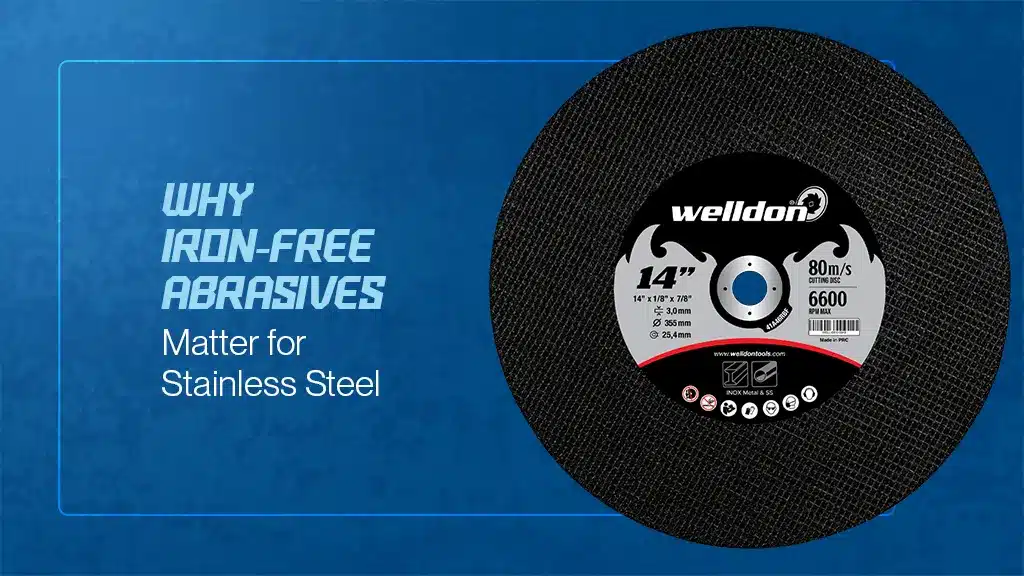
Stainless steel is widely used across industries for its durability, corrosion resistance, and clean finish. From food processing equipment to architectural structures and marine components, it is a material that demands precision and care.
However, many industrial buyers overlook a critical factor during fabrication and finishing: abrasive contamination.
Using the wrong abrasive—especially one containing iron—can compromise the very properties that make stainless steel valuable. Even microscopic iron particles embedded during grinding or cutting can lead to rust, discoloration, and product failure.
This is why iron-free abrasives for stainless steel are not just a preference—they are a necessity for maintaining quality, safety, and compliance.
What Are Iron-Free Abrasives?
Iron-free abrasives (often labeled as Fe-free or Inox abrasives) are specially manufactured to contain minimal levels of iron, sulfur, and chlorine, typically below 0.1%.
These abrasives are designed specifically for working with stainless steel and other sensitive alloys where contamination must be avoided.
Common Types of Iron-Free Abrasives
- Grinding discs
- Cutting wheels
- Flap discs
- Polishing abrasives
Unlike standard abrasives, iron-free variants ensure that no harmful particles are transferred onto the stainless steel surface during operation.
Why Stainless Steel Requires Special Abrasives
Stainless steel derives its corrosion resistance from a thin chromium oxide layer that forms naturally on its surface. This protective layer prevents rust and ensures long-term durability.
However, this layer is highly sensitive to contamination.
When iron particles from standard abrasives embed into the surface:
- The protective layer is disrupted
- Oxidation begins at contamination points
- Rust forms even on “stainless” steel
This not only affects the appearance but also weakens the structural integrity of the material over time.
For industries where hygiene, durability, and aesthetics are critical, this is a serious risk.
The Problem: Iron Contamination in Abrasives
What Causes Iron Contamination?
- Using standard abrasives designed for carbon steel
- Sharing tools between different materials
- Low-quality abrasive manufacturing processes
What Happens When Contamination Occurs?
- Visible rust spots on stainless steel surfaces
- Surface discoloration and staining
- Reduced corrosion resistance
- Increased rejection rates in quality inspections
In many cases, the damage is not immediately visible but develops over time—leading to costly rework or product failure.
Key Benefits of Iron-Free Abrasives for Stainless Steel
1. Prevents Corrosion
Iron-free abrasives eliminate the risk of embedded iron particles, preserving the protective oxide layer of stainless steel.
2. Delivers a Clean, Professional Finish
These abrasives ensure a smooth, contamination-free surface—essential for high-end industrial and architectural applications.
3. Meets Industry Compliance Standards
Industries such as food processing, pharmaceuticals, and chemical manufacturing often require contamination-free surfaces to meet strict regulations.
4. Extends Product Lifespan
By preventing rust and degradation, iron-free abrasives help maintain the long-term performance of stainless steel components.
5. Reduces Rework and Operational Costs
Avoiding contamination means fewer defects, less reprocessing, and improved overall efficiency.
Industries Where Iron-Free Abrasives Are Essential
Iron-free abrasives are not optional in many sectors—they are mandatory.
Food & Beverage Processing
Hygiene is critical. Contamination can lead to regulatory violations and safety risks.
Pharmaceutical Manufacturing
Strict cleanliness standards require contamination-free surfaces.
Marine & Shipbuilding
Exposure to moisture and salt increases the risk of corrosion.
Chemical Processing Plants
Corrosion resistance is essential for handling aggressive substances.
Architectural & Decorative Applications
Surface finish and aesthetics must remain flawless over time.
How to Identify Iron-Free Abrasives
Selecting the right abrasive starts with proper identification.
Look for These Indicators:
- “Fe-Free” or “Iron-Free” labeling
- “Inox” marking (commonly used for stainless steel applications)
- Manufacturer specifications confirming low iron content
Verify Supplier Credibility
Always work with trusted suppliers who provide clear documentation and consistent quality.
Iron-Free vs Standard Abrasives: Key Differences
Contamination Risk
Iron-free abrasives are specifically engineered to eliminate iron content, ensuring that no harmful particles are transferred onto stainless steel surfaces during grinding or cutting. This makes them ideal for contamination-sensitive applications. In contrast, standard abrasives often contain iron, which can embed into the material and lead to corrosion issues over time.
Corrosion Resistance
One of the biggest advantages of iron-free abrasives is their ability to preserve the natural chromium oxide layer of stainless steel. This protective layer is essential for preventing rust and maintaining durability. Standard abrasives, however, can damage this layer, increasing the risk of oxidation and long-term material degradation.
Surface Finish Quality
Iron-free abrasives deliver a clean, smooth, and professional finish without discoloration or staining. This is especially important in industries where appearance and hygiene are critical. On the other hand, standard abrasives may leave behind surface imperfections, rust marks, or contamination that affects both aesthetics and performance.
Industry Compliance
Iron-free abrasives meet strict industry standards required in sectors such as food processing, pharmaceuticals, and chemical manufacturing. These industries demand contamination-free surfaces to ensure safety and regulatory compliance. Standard abrasives often fall short of these requirements, making them unsuitable for such applications.
Long-Term Cost Efficiency
Although iron-free abrasives may have a slightly higher upfront cost, they offer better long-term value. By reducing rework, preventing product rejection, and extending the lifespan of stainless steel components, they help lower overall operational costs. Standard abrasives may seem cost-effective initially, but often lead to higher expenses due to defects, repairs, and inefficiencies.
Best Practices for Using Iron-Free Abrasives
To maximize performance and avoid contamination:
Use Dedicated Tools
Never use the same tools for carbon steel and stainless steel.
Avoid Cross-Contamination
Keep stainless steel work areas separate.
Store Abrasives Properly
Ensure clean, dry storage away from contaminants.
Train Operators
Educate workers on the importance of using the correct abrasives.
Follow Recommended Speeds
Always operate within specified RPM limits for safety and efficiency.
Common Mistakes to Avoid
Even experienced professionals can make costly errors:
- Using regular abrasives on stainless steel
- Mixing tools between different materials
- Ignoring product labeling
- Choosing low-cost options over quality
These mistakes often result in hidden costs, including product rejection, reputational damage, and safety risks.
Why Choose Welldon Iron-Free Abrasives
When it comes to stainless steel processing, quality cannot be compromised.
Welldon offers a complete range of high-performance iron-free abrasives for stainless steel, designed to meet the demands of modern industrial applications.
What Sets Welldon Apart?
- Strict compliance with iron-free standards
- Advanced manufacturing for consistent performance
- Durable and efficient abrasive discs
- Reliable supply for B2B buyers and distributors
- Solutions tailored for industrial-scale operations
Welldon’s abrasives are engineered to deliver precision, safety, and long-term value—making them the preferred choice for professionals worldwide.
Conclusion: Protect Your Stainless Steel Investment
Stainless steel is a premium material—but its performance depends heavily on how it is processed.
Using standard abrasives may seem cost-effective in the short term, but the risk of contamination, corrosion, and rework can lead to significant losses.
By choosing iron-free abrasives for stainless steel, you ensure:
- Superior surface quality
- Long-term corrosion resistance
- Compliance with industry standards
- Improved operational efficiency
For industrial buyers, this is not just a technical decision—it is a strategic investment in quality and reliability.
Get High-Performance Iron-Free Abrasives with Welldon
Looking for reliable, contamination-free abrasive solutions for stainless steel?
Welldon delivers high-quality iron-free abrasives designed for industrial performance, durability, and safety.
Contact Welldon today for bulk orders, distributor partnerships, or custom requirements.